
03 / Boxes
Acrylic boxes, storage and gift packaging
A box is a tolerance problem, not a shape problem. Ten microns on the lid clearance turns premium into cheap; two tenths on compartment pitch and batch 500 has some tight and some loose. All eight models here carry those numbers on the drawing.
03 / Boxes
Boxes, Storage & Gifts
Clearance is the whole game in this line, so it is fixed at drawing stage rather than chased at assembly. Lid-to-body gap is held at 0.3 mm, compartment pitch at ±0.2 mm, and latch, magnet and hinge positions are drilled from a jig rather than marked by hand. Walls are 3–8 mm cast sheet, edges flame- or diamond-polished, and the interior is either left clear or lined with flock, felt or EVA foam. Batch 500 opens with the same feel as the first sample.
03 / Boxes
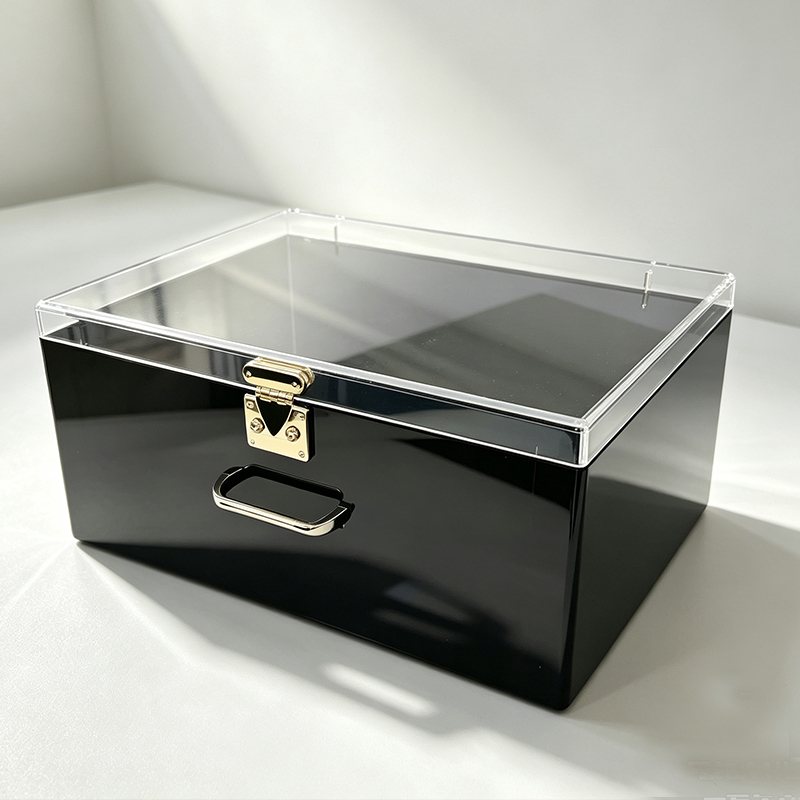
Acrylic storage box
Sized to the contents: 0.3 mm lid clearance, ±0.2 mm compartment pitch, stackable.
03 / Boxes
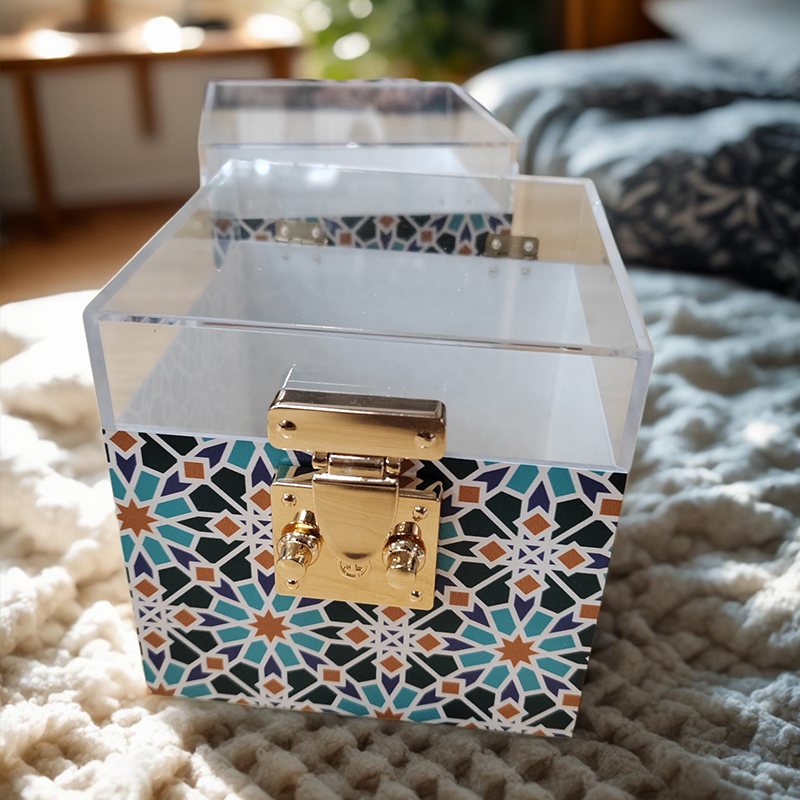
Clear presentation gift box
3 mm lid over a 5 mm body, magnet recessed into the wall, laser-engraved logo on top.
03 / Boxes
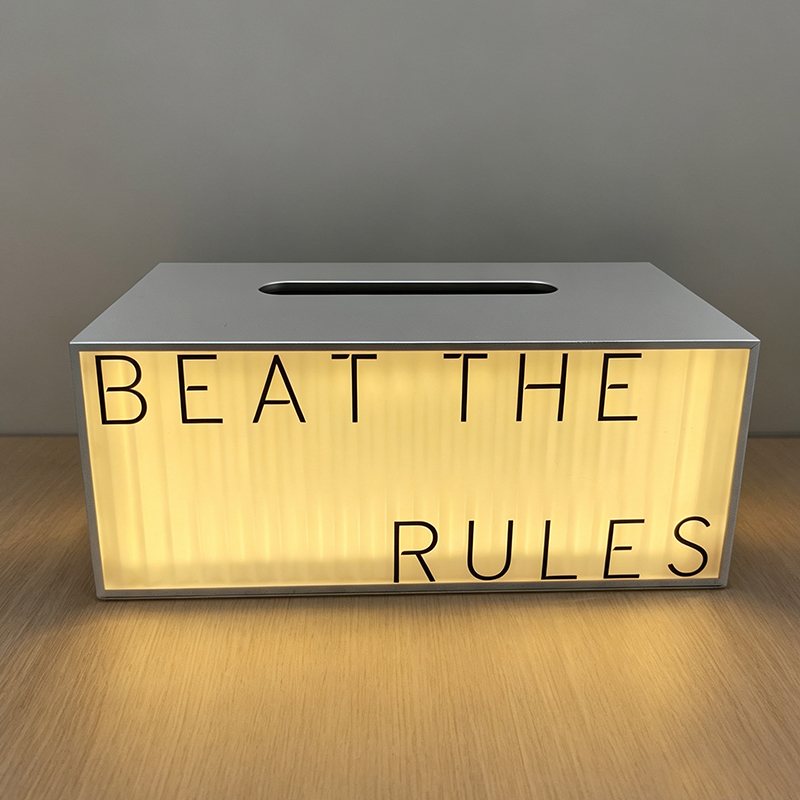
Acrylic tissue box
Hotel and desk version with a polished draw slot that will not catch tissue, non-slip base.
03 / Boxes
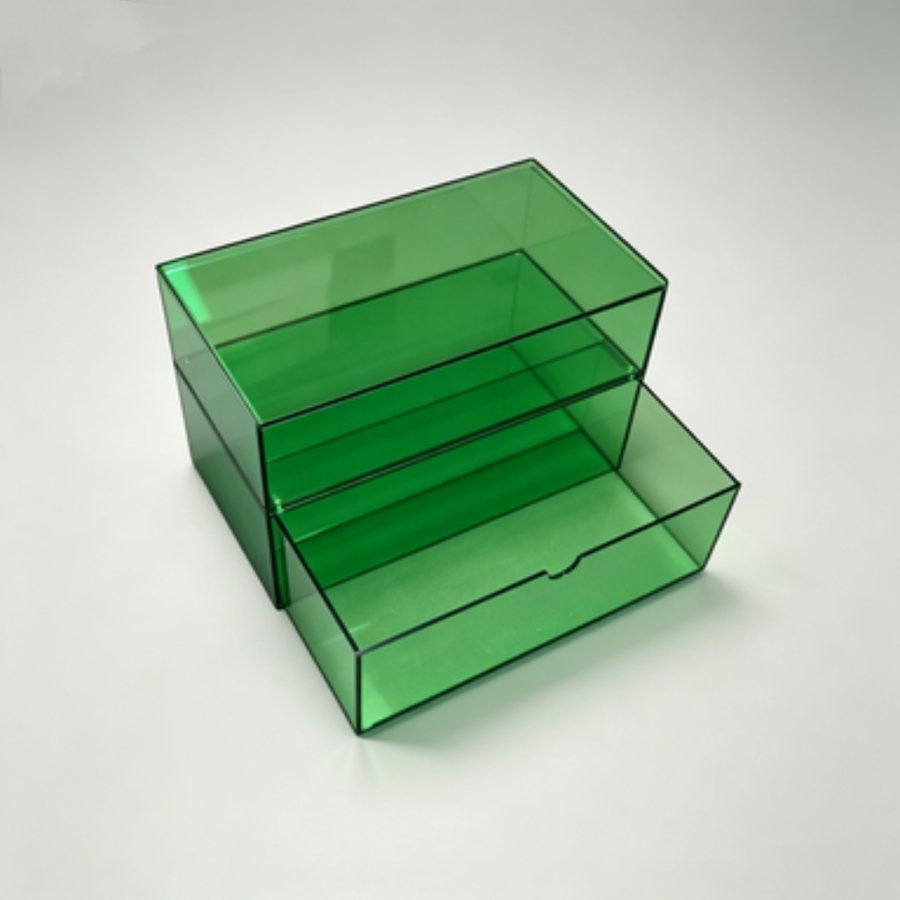
Multi-drawer storage box
Green-tinted multi-drawer unit with rattle-free slides for cosmetics or desk stationery.
03 / Boxes
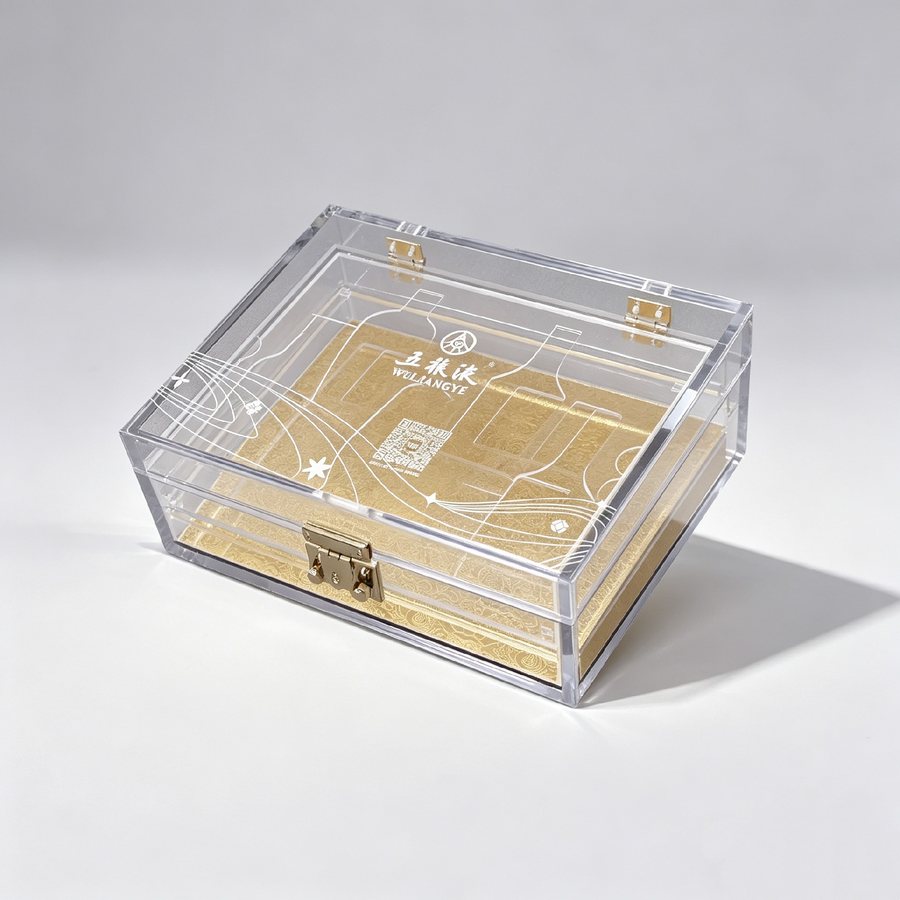
Spirits gift box
One-piece body with a metal latch, foam-free interior cut to the bottle so nothing shifts in transit.
03 / Boxes
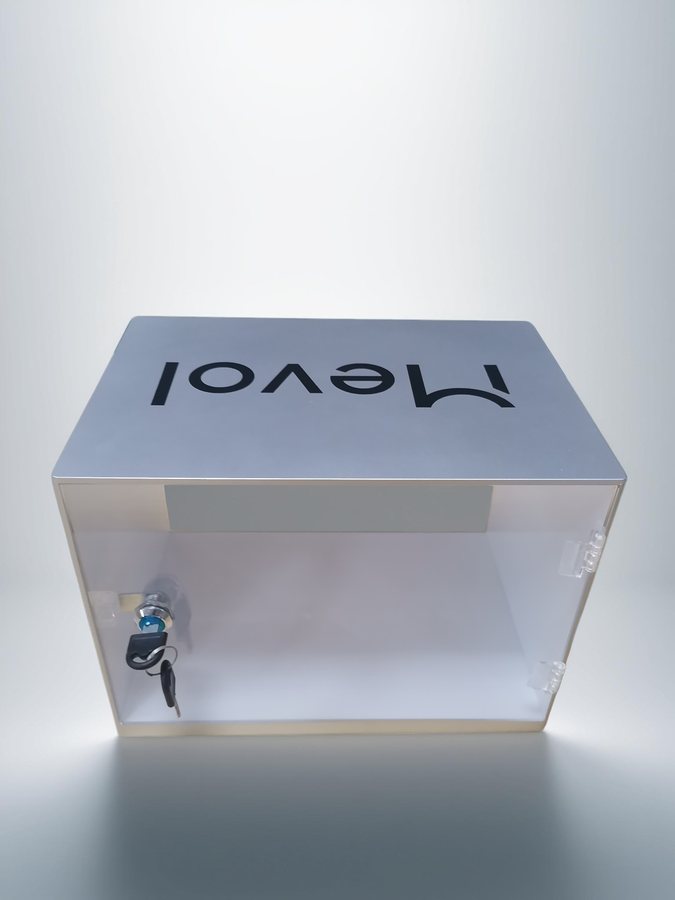
Lit side-opening display box
Side door with LED strip and lock for samples and limited editions; hinge cycle-tested.
03 / Boxes
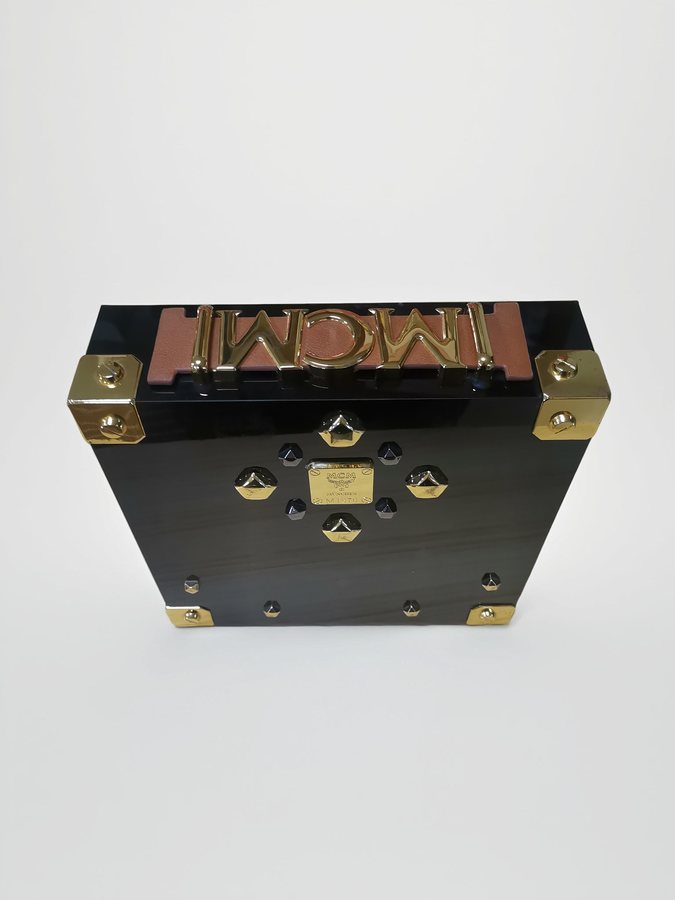
Black decorative storage box
Solid black sheet with rivet detailing and a matte finish that hides fingerprints.
03 / Boxes
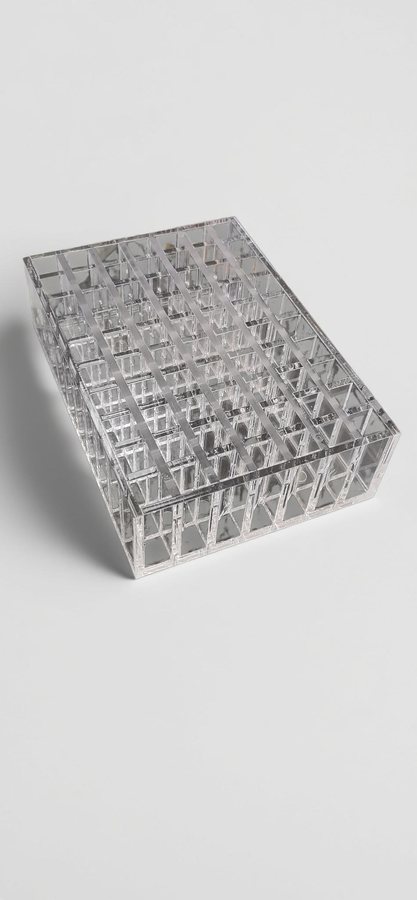
Multi-grid display box
Grid layout for lipsticks and bottled samples, compartments rearrangeable, clear lid for stock checks.
03 / Boxes
What this line covers
From a plain storage box to a lockable sample case, the range is wide but the tolerances are the same on every one of them.
Storage comes first: a stackable acrylic storage box with 0.3 mm lid clearance, a multi-drawer unit where the drawer fit has to run without rattle across 20 drawers, and a multi-grid storage box whose dividers can be re-arranged without tools. Presentation is the second group — a clear acrylic gift box with a concealed magnet and a laser-engraved lid, a jewelry box with a flocked insert, a tissue box with a rounded pull slot, and a spirits gift box with a bottle cutout and an EVA collar.
Small-format work is the third group and the one most often underestimated. A laser-cut acrylic keychain, a desk nameplate, a recognition award or trophy, and a branded paperweight are all cut from offcuts of larger jobs, which is why the unit price on 200 pieces is usually lower than buyers expect. The limitation is colour: a keychain run in a custom tint carries the same one-sheet minimum as any other custom-colour job, so it is worth choosing from the stock range unless the brand colour is non-negotiable.
| Piece | What decides the quality |
|---|---|
| Storage box | Lid clearance at 0.3 mm and a rebated skirt so it locates rather than slides |
| Gift box | Concealed magnet rather than a visible catch; underside engraving rather than top-face |
| Jewelry box | 1 mm flock insert applied after polishing, cut 0.5 mm undersize so it does not lift |
| Tissue box | 5 mm wall so it does not flex when lifted half-full; 2 mm radius on the pull slot |
| Wine gift box | Bottle well 3 mm oversize with a 15 mm collar, EVA insert to take up mould variation |
| Sample or display box | Dividers machined as one comb so pitch holds to plus or minus 0.2 mm |
| Keychain | 3 mm cast sheet, polished edge, 4 mm hole with a 1 mm chamfer so it does not crack |
| Nameplate or award | Engraved or reverse-printed face, felt base, stand-off fixings supplied loose |
One rule covers the whole line: fix the clearance on the drawing, do not chase it at assembly. A box that is hand-fitted will open differently on piece 1 and piece 500, and the customer notices on the second one.
What to put on the drawing for a box
| Callout | What we need | Why it matters on a box |
|---|---|---|
| Internal dimensions | The cavity, not the outside | The object sets the cavity; the walls follow from thickness |
| Lid clearance | 0.3 mm machined, 0.5 mm bent | Below 0.2 binds, above 0.6 rattles |
| Compartment pitch | Pitch and tolerance (±0.2 mm) | Even pitch is what stops "some tight, some loose" |
| Latch or magnet | Type and position | Fixed at drawing stage so lid and body align across a batch |
| Insert | Flock, felt, or shaped EVA | A shaped EVA insert needs a cut file per cavity |
| Lid mechanism | Lift-off, hinged, or sliding | A hinged lid needs a piano hinge or a knuckle, not two butt hinges |
The single most useful number on a box drawing is the lid clearance, because it is the one that decides whether the box feels premium in the hand. The second is compartment pitch, because that is what a customer notices on the fiftieth opening rather than the first.
How far this line can be pushed
Standard practice, the practical ceiling, and what each step up costs. Quotations are built from your drawing, not from this table.
| Requirement | Standard | Available | Cost / lead impact |
|---|---|---|---|
| Thickness | 3 mm lid, 5 mm body | 2–10 mm combinations | Above 8 mm is mill order |
| Lid fit | 0.3 mm per side | Adjustable 0.15–0.5 mm | 0.15 mm needs a routed mating face |
| Compartments | ±0.2 mm pitch | ±0.1 mm | Requires a CNC locating jig |
| Opening | Lift-off lid | Magnets, metal latch, hinge, side door | Latches need machining, +1–2 days |
| One-colour screen print | UV colour, laser engraving, hot foil | Foil is subcontracted, +2 days |
FAQ
Questions we get on this line
Will the lid be too tight or too loose?
Set to the use case. Frequent opening gets 0.3–0.4 mm; a sealed feel gets 0.15–0.2 mm. On the first sample we make one of each so you can choose by hand.
Is it moisture proof?
Dust proof, yes; airtight, no. Solvent-bonded acrylic is a welded joint rather than a glued one, so it resists damp well but not immersion. True sealing needs a silicone gasket.
Your MOQ is 100 — will you run 30?
Yes, at a higher unit price. The cost is jig and setup time, not material. With a simple structure we will take 30.
How is the insert specified?
By the contents. EVA routed slots are the most stable and the most expensive; flocked board sits in the middle; folded paper is cheapest and least precise.
The other three lines
The same sheet against a different set of acceptance criteria.
Send the requirement, get a concrete plan
A drawing, a sample, or a few reference photos are all fine. Reply within one working day, with a price band and a schedule.