
01 / Display
Acrylic display stands and cabinets
The layer customers see first. Built properly, the product speaks for itself; built badly, good stock looks cheap. These eight models run from countertop risers to a 2 m floor cabinet, all jigged so a rollout repeats store to store.
01 / Display
Retail Display & POP
Every model on this page is built from the same bill of process: 8–30 mm virgin cast sheet, CNC-routed and polished, then solvent-bonded on jigs that hold squareness to 0.5 mm across a metre. LED channels and cable routes are machined into the carcass rather than stuck on afterwards, so the light line stays straight after a year of cleaning. Sizes run from a 200 mm countertop riser to a 2 m floor cabinet; anything taller ships knock-down with concealed fixings.
01 / Display
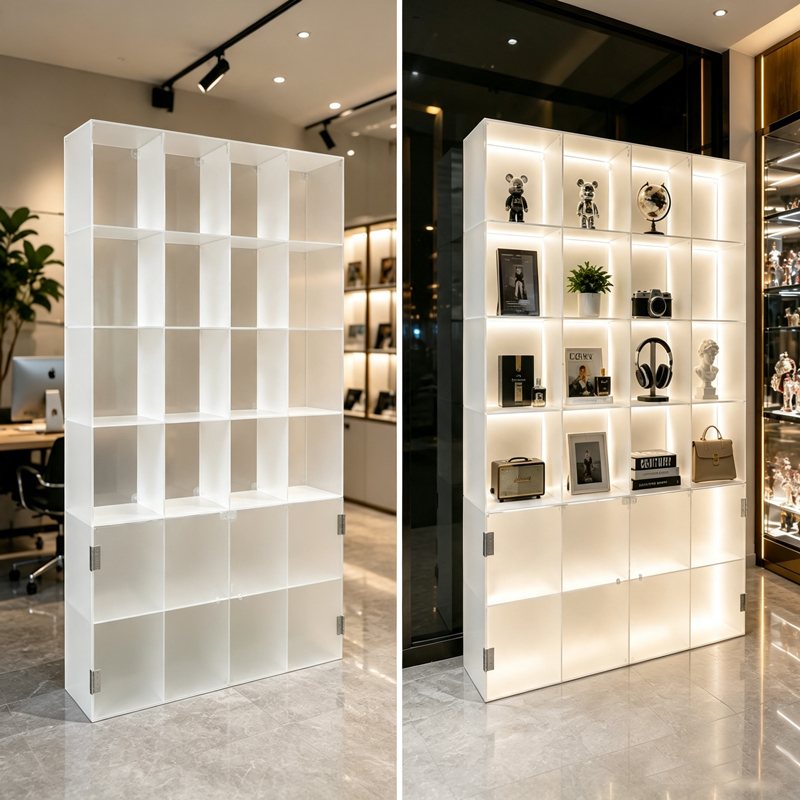
Illuminated display cabinet
Grid cabinet with integrated LED strips so figures and samples are lit from inside; lockable door.
01 / Display
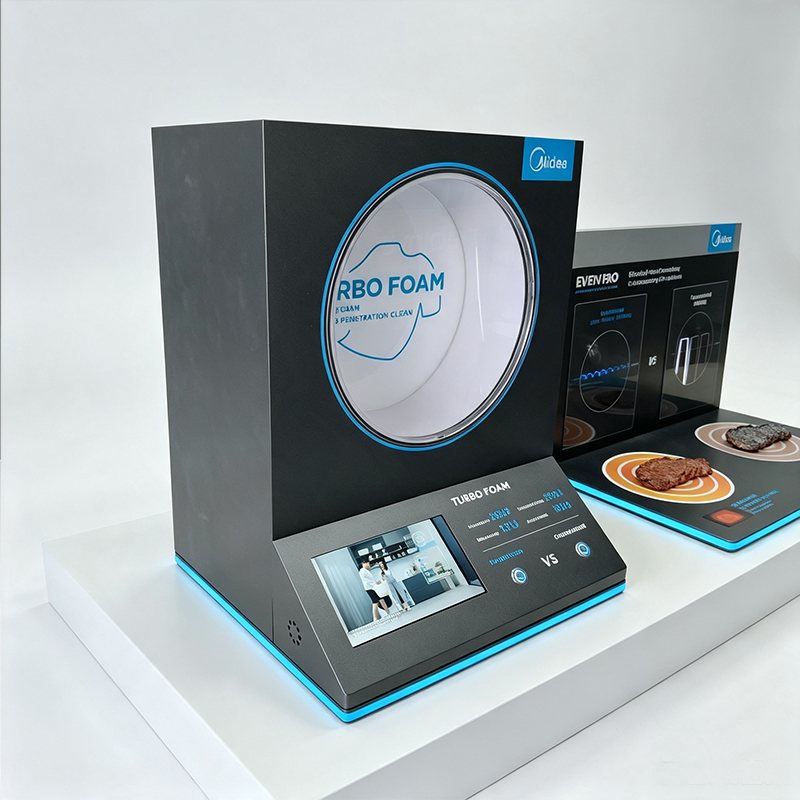
Consumer-electronics display stand
Stepped display for phones, audio and small appliances, with lit shelves and hidden cable routes.
01 / Display
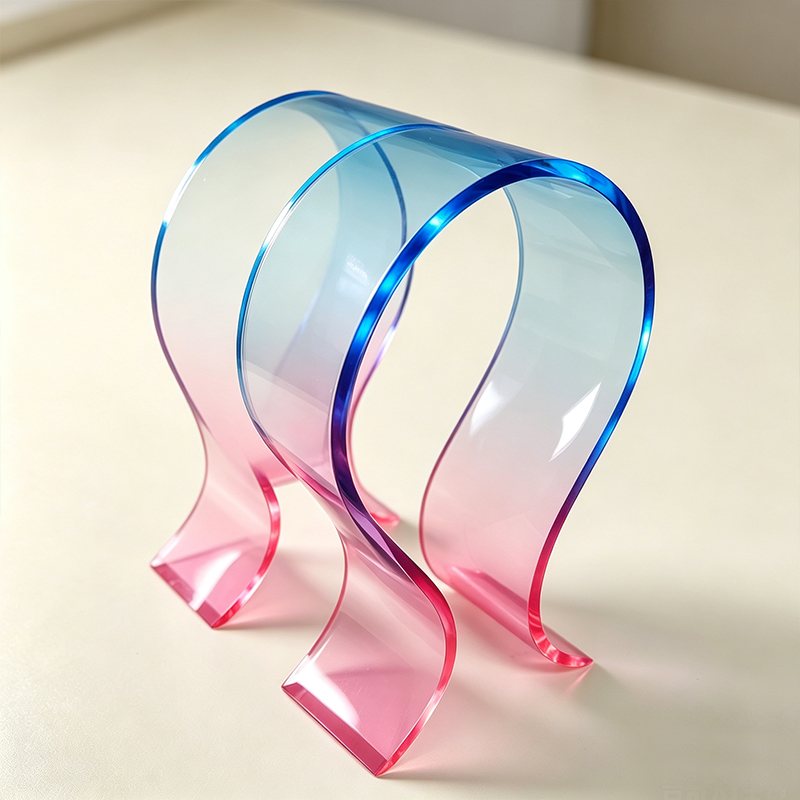
Headphone display stand
Contoured cradle for over-ear headphones, soft-pad contact faces, weighted base that will not tip.

01 / Display
Cosmetics display stand
Tiered counter unit for skincare and colour cosmetics; custom profiles and dividers for counters or live rooms.
01 / Display
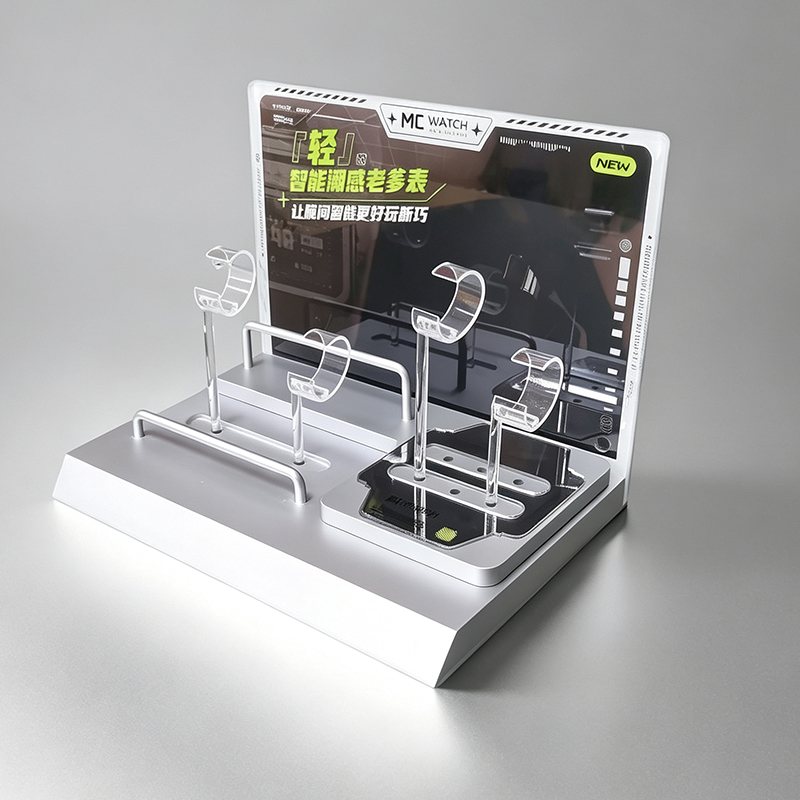
Watch display stand
Single watch cradles and stepped multi-watch stands; cushion angle set to case diameter, glare-free polish.
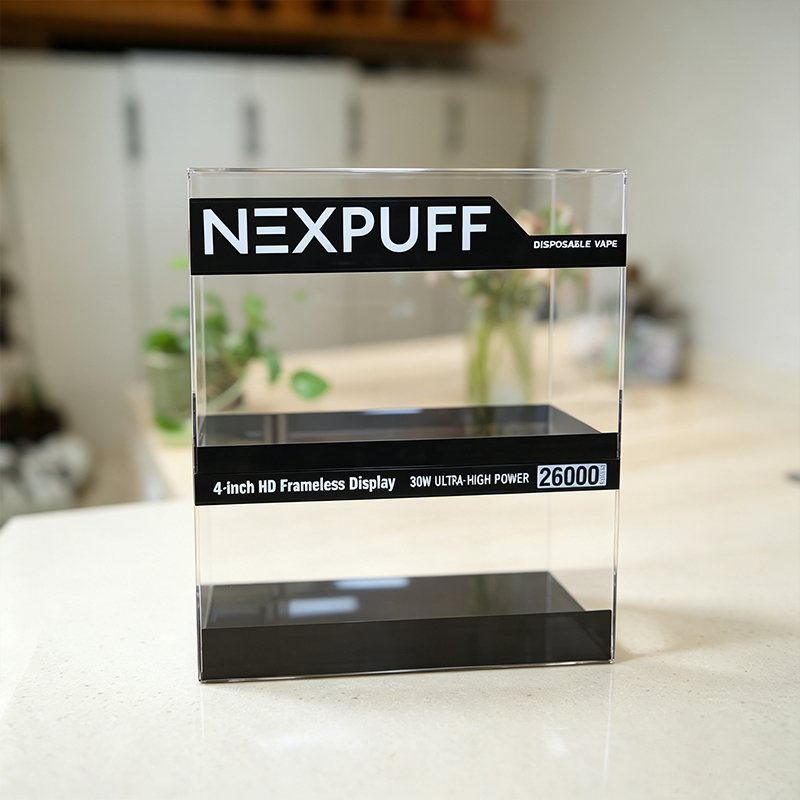
01 / Display
Clear acrylic display stand
The workhorse: four tiers, flame-polished edges, no visible seam, and the same jig repeats store to store.
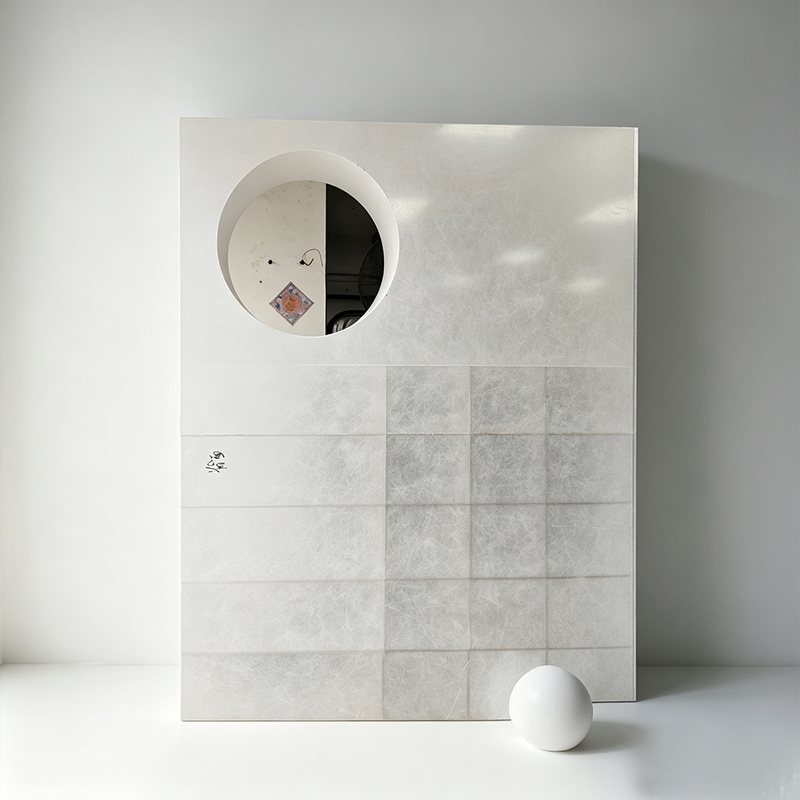
01 / Display
Floor-standing display cabinet
Floor cabinet up to 2 m tall, dust door with magnetic catch or lock, built for contract projects.
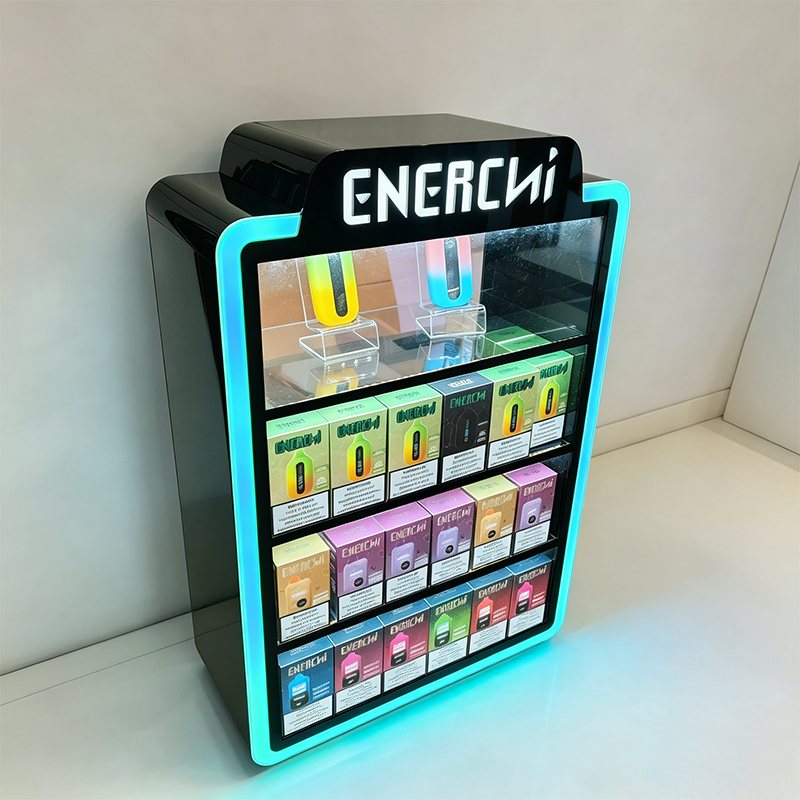
01 / Display
Vape & pod display rack
Countertop lit rack with sized slots for devices and pods, with English price-tag channels for export.
01 / Display
What this line covers
The eight models above are the ones that repeat most often, not the limit of what we build. Below is the full range a retail or POP programme usually draws from, and how each one is normally adapted.
On the counter, the range runs from a plain acrylic riser through tiered display stands and a lit showcase to a slotted display rack for small packaged goods. Between those extremes sit the pieces that carry most brand programmes: a catalog stand or brochure holder for printed material, a jewelry display tray with a flocked insert, a cosmetics tester stand with removable dividers, a watch display stand with an angled cradle, and a headphone display stand with a soft-pad seat. Each one is a variation on the same bill of process — cast sheet, routed, polished, bonded on a jig — so adapting a model costs a drawing revision rather than a new development project.
On the floor, the pattern is a POP display unit or a lockable display cabinet between 900 mm and 2 m. Above 1.2 m the cabinet ships knock-down; below that it can travel assembled. Illumination is machined into the carcass rather than surface-mounted, and the cable route exits at the rear so a unit can be pushed against a wall.
| What you are sourcing | How we normally adapt it |
|---|---|
| Countertop acrylic riser | Height and step count to your product height; 60/90/120 mm is the default three-step set |
| Tiered display stand | Tier pitch matched to the tallest SKU; shelf thickness from 5 mm, or 8 mm where the span passes 500 mm |
| Catalog stand or brochure holder | Pocket sized to A4, A5 or DL with a 3 mm slide allowance; 25 mm lip so the header stays visible |
| Jewelry display tray | Flocked or felt insert, compartment pitch on a machined comb so slots stay parallel |
| Cosmetics tester stand | Removable dividers so a tester line can be re-merchandised without a new unit |
| Watch display stand | Cushion angle set to case diameter; diamond-polished edge to keep glare off the dial |
| Headphone display stand | Soft-pad contact faces, weighted base so it does not tip when a customer lifts a unit |
| Lit showcase | LED channel routed into the carcass, 3 mm diffuser gap, lockable door on a magnetic catch |
| POP display unit | Knock-down above 1.2 m, numbered hardware bag per carton, store-number labelling for a rollout |
If the piece you need is not on the list, send a sketch or a photo of what is in store now. Nine times out of ten it is a variation on one of these, and the reply includes a price band and a schedule rather than a request for a meeting.
What to put on the drawing for a display unit
A display drawing is usually a sketch with a photo attached, and that is enough to start. What turns it into a quote is a small set of numbers, and where they are missing the reply becomes a question rather than a price.
| Callout | What we need | Why it matters on a display |
|---|---|---|
| Overall envelope | Height, width, depth, and the counter height it sits on | Sets riser height and cradle angle for the viewing cone |
| Product envelope | The largest and smallest SKU it must hold | Sets slot pitch and shelf clearance |
| Sheet thickness | Per part, not one figure for the whole unit | A 5 mm shelf on a 600 mm span sags; the span rule decides it |
| Edge finish | Which edges are visible, and flame or diamond | Diamond costs 2–2.5x and is only worth it on a sight line |
| Lighting | LED type, or "slot only" | Changes the carcass routing and the packing |
| Branding | Artwork file, and whether print sits on the reverse face | Reverse print cannot be scratched; top print can |
| Rollout | Store count, if more than one | Triggers a jig and a master colour swatch |
Two callouts are worth flagging because they are the ones most often missing. The counter height matters more than the product size on a countertop unit, because the viewing angle is set by the height difference between the customer's eye and the product. And the largest SKU matters more than the average, because a display designed around the average will not hold the hero product.
How far this line can be pushed
Standard practice, the practical ceiling, and what each step up costs. Quotations are built from your drawing, not from this table.
| Requirement | Standard | Available | Cost / lead impact |
|---|---|---|---|
| Thickness | 5 mm body, 3–5 mm shelves, 8–10 mm floor units | Any combination from 3–20 mm | Above 20 mm is mill order, +3 days |
| Edge | Flame polished, clear bright edge | Diamond polish to mirror, bevel, radius | Diamond polish priced per metre |
| Joint | Solvent bond, invisible seam | Seam position specified to stay off sight lines | Irregular seams need a jig |
| One-colour screen print | UV full colour, subsurface laser, frosted panels | UV priced by area | |
| Tolerance | ±0.5 mm profile, ±0.2 mm holes | ±0.1 mm on hole positions | Requires CNC routing, unit price up |
FAQ
Questions we get on this line
Can the stand be knocked down?
Yes. Floor cabinets and large counters ship as knock-down assemblies with concealed fixings — installed on site with one hex key, and shipping volume roughly halved.
How do you keep batch 20 identical to batch 1?
Same jig, same sheet batch, same parameter card. At first-article approval we record tool, spindle speed and clamping into the card, and the rerun pulls that card.
Do you fit the LED strip?
Either way. We machine the light channel and cable route, and can supply and electrically test the strip, or leave the slot for your own installer.
How tall can a floor cabinet be?
2 m as standard; beyond that it needs splitting into sections with internal reinforcement and crate packing. 1.8–2.0 m is the sweet spot on cost.
The other three lines
The same sheet against a different set of acceptance criteria.
Send the requirement, get a concrete plan
A drawing, a sample, or a few reference photos are all fine. Reply within one working day, with a price band and a schedule.