
Case studies: what the constraint was, and what we did
Seven projects across retail, industry, medical and export. Client names are withheld under NDA; tolerances, quantities and lead times are real.
Seven projects across retail, industry, medical and export. Client names are withheld under NDA; tolerances, quantities and lead times are real.
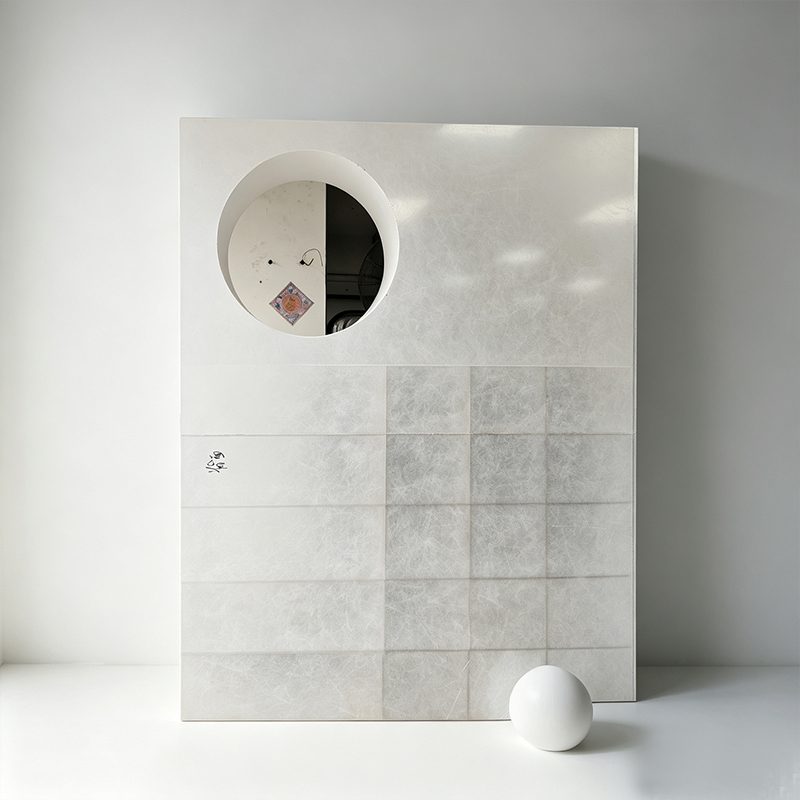
Every store had to look identical across an eight-week rollout. We retained a master colour swatch and held ΔE ≤ 2 across seven production batches.

Bonded joints on 20 mm clear sheet were visible under store lighting. Solved with solvent bonding, jig fixturing and polishing after bond instead of before.

Previous guards crazed within months near coolant mist. Annealed 20 mm bends release forming stress; a coolant-resistant grade and isolated mounts did the rest.
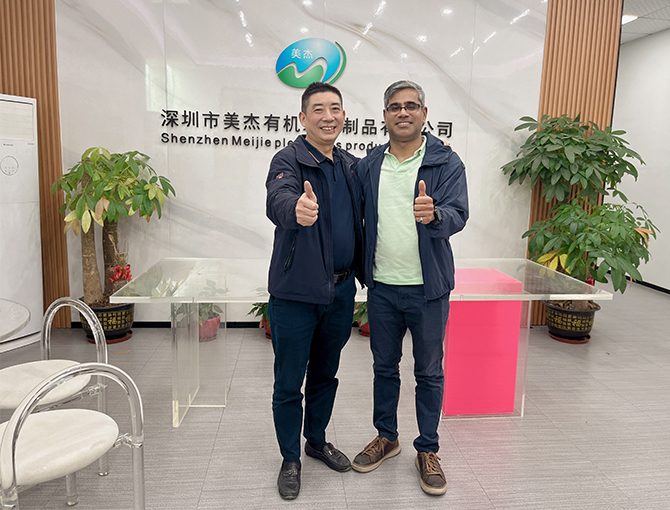
An Australian buyer audited the plant before releasing a full-container order. Neutral cartons with buyer artwork only, no supplier marks, documents issued before loading.
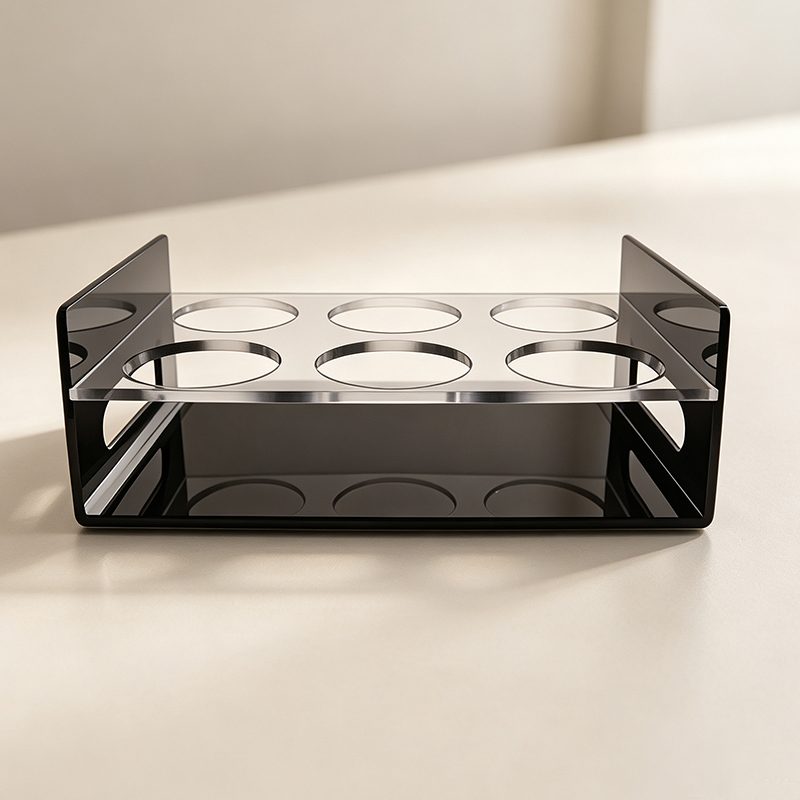
Sanitising wipes were clouding the surface within weeks. Moved to diamond-polished edges on a higher chemical-resistance grade, with an approved cleaning list for staff.
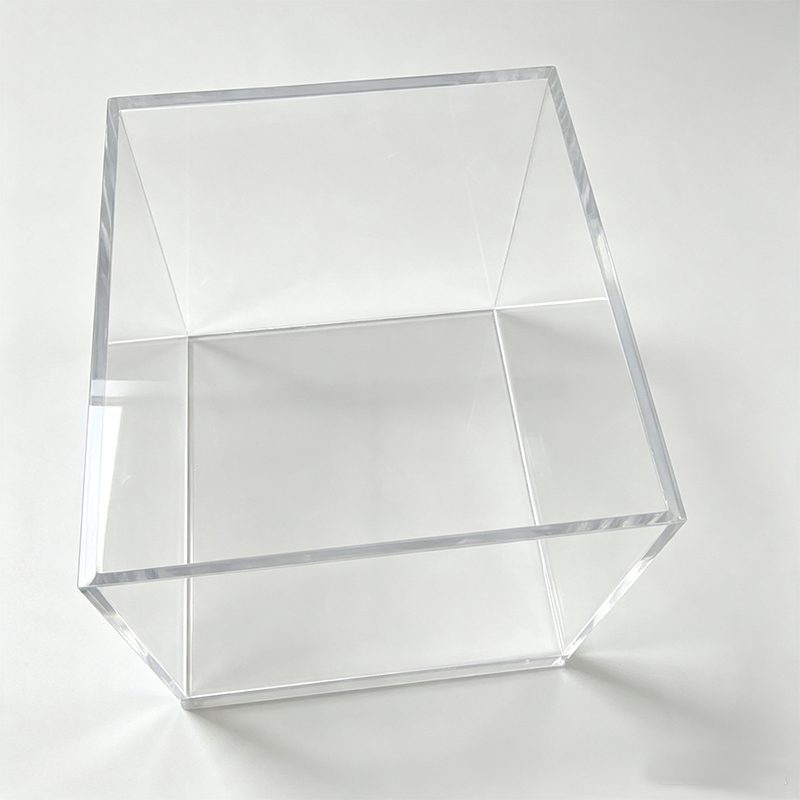
Six SKUs at 300 units each, four weeks before launch. Shared base components across SKUs so only the printed graphic and one cut profile changed — no new tooling.
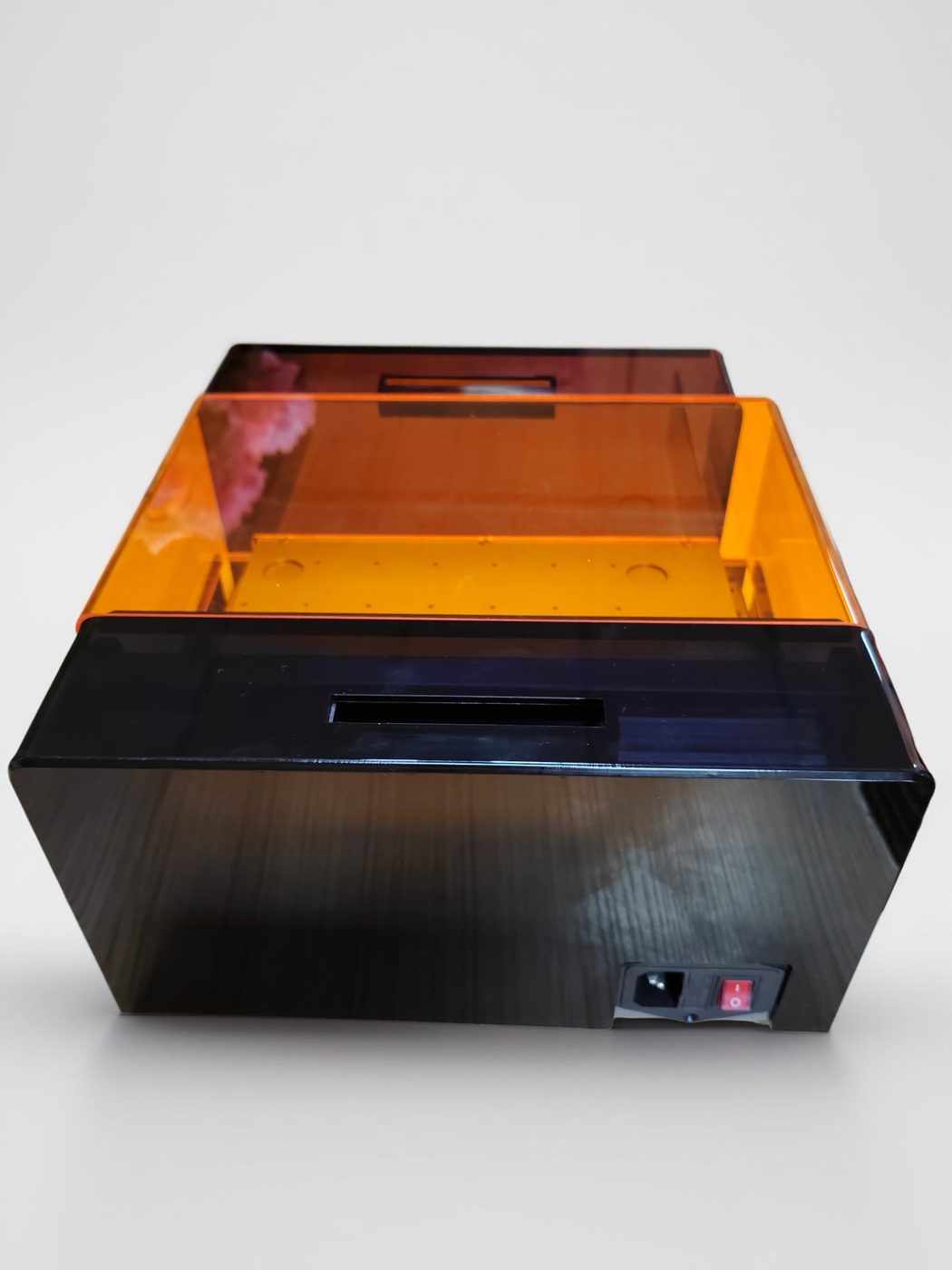
The housing had to seal against a gasket, so flatness mattered more than absolute size. Sealing faces machined to ±0.1 mm and annealed after machining.
How these were measured
Every project has one or two dimensions that actually decide acceptance. The rest is housekeeping.
| Project type | What normally fails | What we control |
|---|---|---|
| Chain retail | Colour drift between batches | Retained master swatch, ΔE ≤ 2, per-batch measurement |
| Beauty counters | Visible bonded seams | Jig-fixtured solvent bonding, post-bond polishing |
| Machine guards | Crazing and cracking at bends | Annealing after bending, grade selection, isolated mounting |
| Export orders | Documentation gaps, packaging damage | Invoice, packing list, CO issued pre-shipment; foam interleave and corner guards |
| Food service | Surface clouding from cleaning agents | Diamond-polished edges, chemical-resistant grade, approved cleaner list |
| Licensed goods | Tooling cost per SKU kills the run | Shared base components, only graphics and one profile change |
| Medical housings | Gasket leaks from stress movement | ±0.1 mm sealing faces, annealed after machining, flatness verified |
Read together, the seven projects are less varied than they look. In six of them the failure that started the conversation was not a material problem at all — it was a requirement that was never written down, so nobody could build to it. The eighth case that people usually ask about, the one that goes wrong, is the one where the drawing was complete and the process was not.
Three patterns repeat across every case on this page, and they are worth checking against your own job before you send a drawing.
1. The tolerance that mattered was never the general tolerance. On the lab enclosure, ±0.3 mm everywhere would have been fine except on the gasket land and the four sealing faces. On the machine guards, the whole panel could sit at ±1 mm as long as the mounting holes were at ±0.1 mm. Specifying a general tolerance and one datum per critical feature costs less than tightening the whole drawing, and it tells the machinist where to spend the time.
2. Stress shows up weeks after delivery, not at inspection. Crazing near a bend, cracks growing out of a drilled hole, a panel that bows after two months in a warm room — all three are residual stress, and all three pass a dimensional check on the day they ship. Annealing after machining and before bonding is the single control that changes the outcome, and it has to be in the routing, not added when a complaint arrives.
3. The schedule risk sits in the week after approval, not in production. In every case here, production ran inside 7–15 business days. What moved the delivery date was the sample loop — a colour that needed a second swatch, a print file that arrived at 300 dpi, a packing drawing approved after the cartons were ordered. If a date is fixed, freeze the sample, the colour and the artwork first, then book production.
| What decided the job | Cases | Where it is controlled |
|---|---|---|
| Colour and appearance consistency | 2 of 7 | Retained master swatch, one sheet batch, ΔE ≤ 2 |
| Residual stress and cracking | 2 of 7 | Anneal after machining, drill before bending, slot holes |
| Sealing and flatness | 1 of 7 | Machined land, annealed before flatness check |
| Packing and documents | 2 of 7 | Per-store cartons, neutral marks, document set closed pre-sailing |
If your project does not resemble any of these, the constraint is probably in a place none of them covers — a regulatory document, a cleaning chemical, an installation sequence on site. Send that constraint first, in a sentence, before the drawing. It changes the quote more than the drawing does.
Each case is written around the constraint that decided the job, not around the finished piece. That is deliberate: the finished piece is on the page as a photograph, and what a buyer actually needs is the constraint and how it was resolved, because their own constraint is probably similar.
Read them in this order if you are scoping a project. The first two are about appearance under retail lighting, which is where most brand work starts. The next two are about durability in service, which is where most industrial work starts. The last three are about schedule and logistics — a launch date, a sealed enclosure, and a container that has to arrive with clean documents.
| Case | Constraint | Resolution |
|---|---|---|
| 120 stores, one fixture standard | Every branch must look identical within eight weeks | One sheet batch, one jig family, per-store cartons with numbered hardware |
| Beauty counters, invisible seams | A 20 mm bonded joint must not read under track lighting | Anneal before bonding, joint moved to the return, diamond-polished edge |
| Guards that survive the shop floor | Panels replaced twice a year, cracking from the mounting holes | Drill before bending, anneal, slot the holes, 12 mm to the edge |
| A full container, neutral packing | No supplier mark anywhere, documents fixed before sailing | Plain film and cartons, buyer part numbers, document set completed pre-sailing |
| Trays wiped every hour | Surfaces clouding rather than cracking | Grade change plus a cleaning protocol etched on the part |
| Six SKUs, four weeks | Licensor date fixed, six character artworks | One construction across six SKUs, geometry and artwork approved in parallel |
| A lab enclosure that had to seal | A silicone gasket had to seal against an acrylic land | Land machined in the mating setup, annealed before the flatness check |
What is not in these pages is the client's name, and that is a rule rather than an oversight. We will describe a constraint and a resolution in as much detail as is useful, and we will tell a prospective buyer which sector a case came from, but a brand's fixture programme is their information. Where a buyer needs a reference, we ask the client first and let them decide.
The more we know about what "good" means for your project, the more useful the first quotation is. What fails today is usually more informative than what you want next.